$59.99 as of Nov 11, 2026Check price
Prusa Research
Original Prusa i3 MK3S+
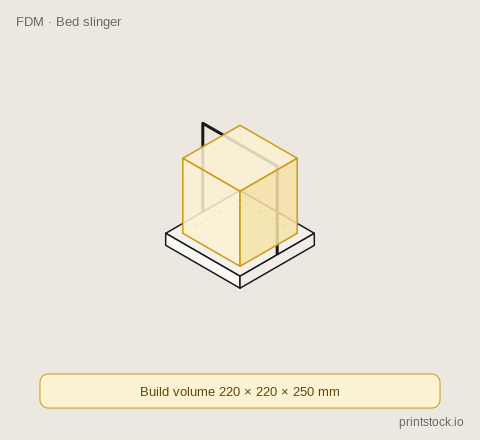
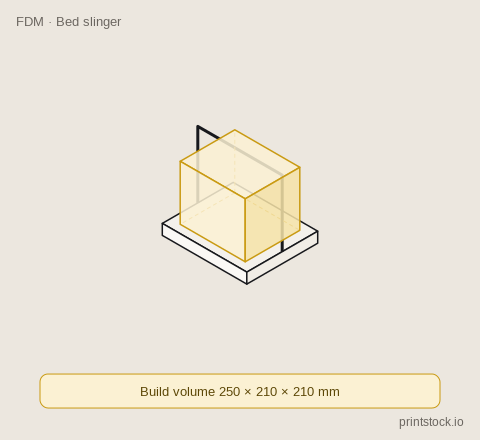
FDMBed slinger250 × 210 × 210 mm
The printer that defined reliable hobby 3D printing for years: 250 × 210 × 210 mm, Bondtech direct drive, E3D V6 hotend, SuperPINDA mesh leveling, magnetic steel sheets. Prusa stopped selling kits on February 29, 2024; support and upgrade kits continue.
Discontinued. Prusa Research no longer makes this model. Compatible accessories and parts are listed below. The current model is Original Prusa MK4S.
Where to buy
Discontinued: no longer sold new, and we track no store that still has it in stock. The current model is Original Prusa MK4S.
Overview
The Original Prusa i3 MK3S+ was, for years, the reference open-frame 3D printer: not the fastest, but famously reliable, open source and backed by detailed documentation and support. It combined a Bondtech direct-drive extruder, an E3D V6 hotend, SuperPINDA mesh bed leveling, magnetic spring steel sheets, power panic recovery and three thermistors for safety.
The MK4 succeeded it in 2023, but demand stayed strong enough that Prusa kept selling it until stopping the kit on February 29, 2024, with assembled units sold until stock ran out. Prusa kept supporting it and offers three upgrade kits: MK3.5S (new board and features, the cheapest and a known dead end), MK3.9S (adds the Nextruder and load cell) and MK4S (full upgrade with new motors).
Thousands of MK3S+ printers still run in workshops and print farms. Spare parts remain available, though some, such as the assembled hotend, have gone out of stock at times; steel sheets and the MMU3 are shared with newer models.
Best for
- Owners keeping an MK3S+ running or planning an upgrade
- Print farms with existing MK3S+ fleets
- Learners who want an open, well-documented machine
Look elsewhere if
- You are buying new: the MK4S or CORE One is much faster
- Speed matters: Bambu Lab or Prusa CORE One printers are several times faster
Before you buy
- Compare upgrade paths: MK3.5S (cheapest), MK3.9S (Nextruder and load cell) or MK4S (full).
- A used MK3S+ plus an upgrade kit can cost nearly as much as a new MK4S kit.
- Steel sheets and the MMU3 work with newer Prusa models too.
- Check the hotend and SuperPINDA on used units.
Pros and cons
Pros
- Very reliable and well documented
- Open source hardware and firmware
- Upgrade paths to newer Prusa tech
- Shared sheets and MMU3
Cons
- Slow by current standards
- No input shaping without an upgrade
- Discontinued
What owners like
The reliable standard
Praised by most ownersReviewers describe it as practically perfect, with best-in-class slicing and a flexible plate that set the standard.
Excellent prints, foolproof setup
Often praisedAll3DP praises excellent print quality and foolproof setup.
Quiet, with easy print removal
Often praisedOwners and reviewers note quiet operation and easy print removal.
Collected the same way as known issues: from independent reviews, owner reports and public discussions, merged and grouped.
Known issues
Last reviewed Nov 12, 2026Popular models have longer lists simply because more people own them and talk about them. Severity and status show how much each problem matters today.
Some spare parts go out of stock
Minor (annoyance)Still reportedOwners on Prusa's forum noticed the assembled MK3S hotend out of stock in late 2024 and asked about the support life cycle; third-party compatible hotends exist. Prusa says it keeps supporting printers after production ends.
Firmware development slowed after end of production
Minor (annoyance)Still reportedOwners asked whether more firmware releases would come after the hardware ended. New features now arrive through the MK3.5S and later upgrade kits rather than the stock MK3S+ board.
How we build this list: we collect independent reviews, owner reports and public discussions on forums and social networks, merge duplicates and group them by cause. Only serious or recurring problems make the list, so a single complaint will not appear here, and a listed problem does not mean every unit is affected.
Specs
Printing
- Type
- FDM
- Build volume
- 250 × 210 × 210 mm
- Kinematics
- Bed slinger
- Multi-color
- Yes
- Nozzles / toolheads
- 1
- Layer height
- 0.05 to 0.35 mm
Extruder and bed
- Extruder
- Direct drive
- Stock nozzle
- 0.4 mm
- Nozzle / hotend
- E3D V6 hotend
- Max nozzle temp
- 300 °C
- Filament
- 1.75 mm
- Build plate
- Removable PEI spring steel sheets on a magnetic bed
- Max bed temp
- 120 °C
- Bed leveling
- Automatic
- Enclosure
- No
Control and sensors
- Screen
- Screen with knob, 3.4 in
- Features
- Filament runout sensorPower-loss recovery
Features
- Safety
- Three thermistors, power panic recovery, filament sensor
Electronics
- Power supply
- Delta power supply
Multi-color
- Multi-material
- MMU2S or MMU3, up to 5 filaments
From maker and store specifications, checked Nov 12, 2026. Power, size, network and warranty are in their own blocks below.
Power and setup
Electricity
- Rated power
- 240 W
- Average while printing
- 80 W
- Note
- 24 V 240 W Delta power supply with power-panic; Prusa lists about 80 W printing PLA and 120 W printing ABS.
Network and cloud
- Works without internet
- Yes, fully (SD card / USB / LAN)
- Maker account
- Only for cloud / remote features
- Local control for other software
- None
- Note
- No built-in network. PrusaLink and Prusa Connect need an added Raspberry Pi: a Pi Zero 2 W or Zero W on the GPIO header, or a Pi 3 to Pi 5 over USB.
Space and room
- Size (W × D × H)
- 500 × 550 × 400 mm
- Weight
- 7 kg
On a standard power circuit
- US 15 A / 120 V standard circuit: fine, and about 1,200 W stays free for other things on that circuit while it heats up
- EU/UK 16 A / 230 V standard circuit: fine, and about 2,700 W stays free for other things on that circuit while it heats up
- A 10-hour run (for example, several figures printed one after another): about 0.8 kWh. Multiply by your price per kWh for the cost.
Our calculation from the maker's rated power and average power while printing, keeping a circuit at 80% for long loads.
Safety and support
Warranty and repair
- Warranty
- 12 months; optional +1 or +2 year extension for MK4S, +1 year for MINI+; printers bought from third parties: one year from delivery
- Repair guides
- Official page ↗
- Open source
- Firmware
Running costs
| PLA filament, per kg | Cheapest in our catalog: Elegoo PLA Basic | $9.34 |
|---|---|---|
| Spare build plate | Smooth PEI Print Sheet | $32.99 |
Cheapest compatible items in our catalog, USD prices as last checked. Prices change; see each item for the date.
Software and firmware
- Slicer / control software
- PrusaSlicer (official), OrcaSlicer, Cura
- Firmware
- Prusa firmware 3.x (open source)
- Connectivity
- SD card, USB
Official firmware and downloads ↗ We never host firmware files.
Questions people ask
Is the Prusa MK3S+ discontinued?
Yes. Prusa stopped selling the kit on February 29, 2024 and sold assembled units until stock ran out. It is still supported.
Which MK3S+ upgrade should I buy?
MK3.5S is the cheapest and adds a new board; MK3.9S adds the Nextruder and load cell; MK4S is the full upgrade with new motors. Many owners pick MK3.9S as the balance.
MK3S+ or MK4S?
The MK4S is far faster, levels automatically with a load cell and supports network printing. Buy an MK3S+ only used and cheap.
Do MK3S+ steel sheets fit the MK4?
Yes, the spring steel sheets are shared across the MK3S+, MK4, MK4S and CORE One families.
Models proven to print on the Original Prusa i3 MK3S+
Coming soonFilaments that fit (67)
Matched by PrintStock from published specs: filament diameter, maximum nozzle and bed temperature and enclosure. Not a print test.
- PETG
- Anycubic PETG, Bambu Lab PETG Basic, Bambu Lab PETG Matte, Creality Hyper PETG, Elegoo PETG Pro, Elegoo Rapid PETG, eSUN PETG, eSUN PETG-Matte, Overture High Speed PETG, Polymaker PETG, Polymaker PolyLite PETG, Prusament PETG, Spectrum PETG, Spectrum PETG Premium High Speed, SUNLU PETG, SUNLU PETG 2.0
- PLA
- Anycubic PLA+, Anycubic PLA Basic, Anycubic PLA High Speed, Anycubic PLA Silk, Bambu Lab PLA Basic, Bambu Lab PLA Matte, Bambu Lab PLA Silk+, Bambu Lab PLA Translucent, Creality Hyper PLA, Creality Hyper PLA RFID, Elegoo PLA, Elegoo PLA Basic, Elegoo PLA Matte, Elegoo PLA Pro, Elegoo PLA Silk, eSUN PLA+, eSUN PLA Basic, eSUN PLA+HS, eSUN PLA-Matte, eSUN PLA-Silk Rainbow, Overture Easy PLA, Overture Matte PLA Dual Colors, Overture PLA+, Overture Silk PLA Gradient, Polymaker Panchroma PLA, Polymaker Panchroma PLA Matte, Polymaker Panchroma PLA Silk, Polymaker PLA Pro, Polymaker PolyLite PLA, Polymaker PolyLite PLA Pro, Polymaker PolyLite Silk PLA, Polymaker PolyMax PLA, Polymaker PolyTerra PLA, Prusament PLA, Spectrum Huracan PLA, Spectrum PLA, Spectrum PLA Pro, Spectrum Premium PLA High Speed, SUNLU High-Speed PLA, SUNLU PLA+ 2.0, SUNLU Silk PLA+ 2.0
Compatible accessories
Everything that fits the Original Prusa i3 MK3S+
$54.99 as of Nov 11, 2026Check price
$32.99 as of Nov 11, 2026Check price
$36.99 as of Nov 11, 2026Check price
$43.99 as of Nov 11, 2026Check price
$389 as of Nov 11, 2026Check price
Closest alternatives by price
Compare all side by side