Stratasys Origin Two
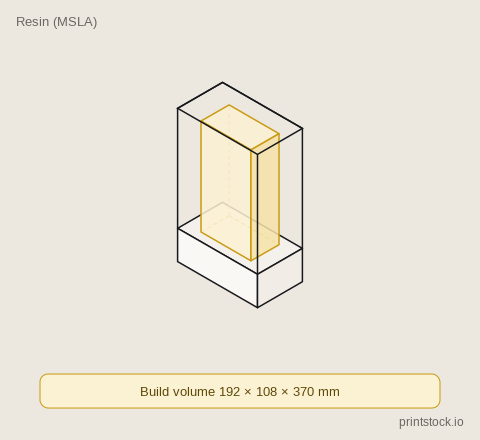
Stratasys P3 DLP production printer: 192 × 108 × 370 mm, ±50 µm accuracy across printers, surface roughness down to 2 µm Ra, heated chamber for viscous high-performance resins.
How to buy
Stratasys sells this machine through quotes and resellers; the price depends on configuration, software and service.
Taxes, delivery, installation and any import duties are set by the seller when you order; agree them with the maker or its reseller.
Overview
The Origin Two is Stratasys's resin printer for end-use production, the successor to the Origin One that Stratasys gained by buying Origin. Its P3 process combines a 385 nm DLP light engine with a heated build chamber and controlled pull forces, which lets it print viscous, high-performance resins that are thick or even solid at room temperature.
Stratasys pitches it as an alternative to injection moulding for low and mid volumes: its spec sheet claims more than 95% of prints within ±50 µm across printers and build heads, and surface roughness down to 2 µm Ra. Medically certified and ESD, elastomer and high-temperature materials are on offer, and an OpenAM licence opens other resins.
The published accuracy assumes Stratasys's Origin Cure post-processing unit. It is sold on quotation.
Best for
- Low-volume production parts with injection-moulded finish
- Medical devices in certified resins
- Elastomer, ESD and high-temperature resin parts
Look elsewhere if
- Prototype-only use: desktop resin printers cost far less
- Parts larger than 192 × 108 mm in plan
Before you buy
- Budget Origin Cure: specs depend on it.
- Check which P3 materials are validated for your part.
- Ask about the OpenAM licence if you need third-party resins.
Pros and cons
Pros
- Production-grade accuracy
- Viscous high-performance resins
- Smooth surfaces
Cons
- Quote only
- Needs Origin Cure
- Small plan area
Known issues
Last reviewed Nov 15, 2026We have not found serious or recurring problems with this model so far.
How we build this list: we collect independent reviews, owner reports and public discussions on forums and social networks, merge duplicates and group them by cause. Only serious or recurring problems make the list, so a single complaint will not appear here, and a listed problem does not mean every unit is affected.
Specs
Printing
- Type
- Resin
- Process
- DLP (projector resin)
- Made for
- Industrial
- Build volume
- 192 × 108 × 370 mm
- Materials
- Resin
- Layer thickness
- 25 to 200 µm
- Accuracy
- >95% of prints within ±50 µm across printers and build heads (maker figure)
- Surface finish
- Down to 2 µm Ra
Hardware
- Enclosure
- Yes
Files and setup
- Variants
- Origin One+
Process
- Technology
- Programmable PhotoPolymerization (P3) DLP, 385 nm
Build
- Chamber
- Heated, for viscous or room-temperature-solid resins
Materials
- Material licence
- Stratasys and partner P3 materials; OpenAM licence for other resins
Workflow
- Post-processing
- Origin Cure required for published specs
From maker and store specifications, checked Nov 15, 2026. Power, size, network and warranty are in their own blocks below.
Power and setup
Network and cloud
- Works without internet
- No, needs internet
- Maker account
- Required
- Note
- Like all Origin printers it connects only through Stratasys' Origin cloud service; GrabCAD Print reaches it by logging in to Origin rather than by a direct local connection.
Space and room
- Size (W × D × H)
- 500 × 520 × 1,170 mm
- Weight
- 86 kg
For business buyers
What the room needs
- Optional facility exhaust for gases
- Origin Cure post-processing unit needed for published accuracy
Software and firmware
- Slicer / control software
- GrabCAD Print; Origin software with OpenAM licence
Questions people ask
What is the Origin Two build volume?
192 × 108 × 370 mm.
How accurate is it?
Stratasys states more than 95% of prints within ±50 µm across printers and build heads, depending on material and geometry.
Does it need post-processing?
Yes, the published accuracy and finish require Stratasys's Origin Cure unit.