Raise3D Forge1
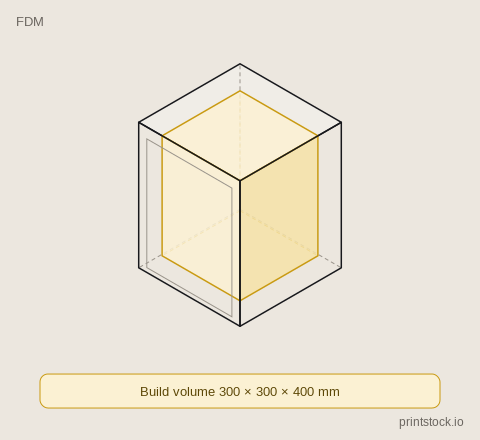
Raise3D's metal FFF printer: dual extrusion of BASF Ultrafuse 316L and 17-4 PH metal filament into green parts, 300 × 300 × 300 mm, part of the MetalFuse system with D200-E debinder and S200-C sintering furnace.
- Most nozzles of the 30 FDM printers we list
Where to buy
Prices as of Nov 11, 2026Taxes, shipping and any import duties are worked out by the store at checkout and depend on your country; ask the store if in doubt.
Store links may be affiliate links: we may earn a commission, and it does not change your price. Affiliate disclosure
Overview
The Forge1 is Raise3D's metal FFF printer, part of its MetalFuse system. It prints BASF Ultrafuse 316L stainless and 17-4 PH filaments, developed together with Forward AM, into green parts: metal powder held in a polymer binder. Those parts then go through catalytic debinding in Raise3D's D200-E and sintering in the S200-C furnace to become solid metal.
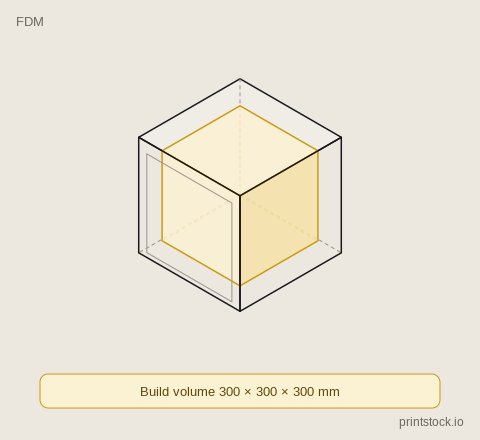
The printer itself is based on the Pro3 platform with dual extrusion, an electronic lifting system and a 300 mm cube volume, and a second extruder can lay down separation or support material for complex geometries. Raise3D pitches it as a cost-effective way to build an in-house farm for small batches of metal parts compatible with metal injection molding post-processing.
The catch is the full workflow: the printer is about $10,000 and the debinding and sintering equipment, or a sintering service, adds much more. Parts shrink during sintering, so design rules differ from plastic printing. It suits companies already committed to in-house metal parts, not hobbyists.
Best for
- Small batch stainless steel parts in-house
- Prototyping metal components
- Companies building a MetalFuse workflow
Look elsewhere if
- Hobbyists
- You lack debinding and sintering capacity
Before you buy
- Budget the D200-E and S200-C or a sintering service.
- Learn shrinkage compensation for sintering.
- Store metal filament dry.
- Plan floor space: the printer is 1.39 m tall.
Pros and cons
Pros
- Metal parts via FFF
- BASF-validated filaments
- Dual extrusion
- Industrial build
Cons
- Full system is expensive
- Multi-step process
- Shrinkage design rules
Known issues
Last reviewed Nov 13, 2026We have not found serious or recurring problems with this model so far.
How we build this list: we collect independent reviews, owner reports and public discussions on forums and social networks, merge duplicates and group them by cause. Only serious or recurring problems make the list, so a single complaint will not appear here, and a listed problem does not mean every unit is affected.
Specs
Printing
- Type
- FDM
- Made for
- Professional
- Build volume
- 300 × 300 × 300 mm
- Kinematics
- Other
- Multi-color
- Yes
- Nozzles / toolheads
- 2
Extruder and bed
- Stock nozzle
- 0.4 mm (0.2 and 0.6 mm)
- Max nozzle temp
- 300 °C
- Filament
- 1.75 mm
- Build plate
- Glass plate
- Max bed temp
- 120 °C
- Bed leveling
- Automatic
- Enclosure
- Yes
Control and sensors
- Screen
- Touchscreen, 7 in
- Features
- Power-loss recovery
Files and setup
- Arrives
- Ships assembled
Materials
- Materials
- BASF Ultrafuse 316L and 17-4 PH metal filaments, ceramics
Toolheads
- Extrusion
- Dual with electronic lifting, 1.75 mm
Process
- Process
- Prints green parts for debinding and sintering
System
- MetalFuse
- D200-E debinder and S200-C sintering furnace
Connectivity
- Ports
- USB × 2, Ethernet
From maker and store specifications, checked Nov 12, 2026. Power, size, network and warranty are in their own blocks below.
Power and setup
Space and room
- Size (W × D × H)
- 620 × 626 × 1,390 mm
Safety and support
Safety
- Noise (maker figure)
- 55 dB, under 55 dB (maker)
Computer you need
- Runs on
- Windows
Software and firmware
- Slicer / control software
- ideaMaker
- Firmware
- Raise3D firmware (embedded Linux) via RaiseCloud or USB
- Connectivity
- Wi-Fi, Ethernet, USB; RaiseCloud
Official firmware and downloads ↗ We never host firmware files.
Questions people ask
Does the Forge1 print finished metal parts?
It prints green parts that must be debound and sintered.
Which metals can it print?
BASF Ultrafuse 316L and 17-4 PH, among others.
What else do I need?
A debinder and sintering furnace, such as Raise3D's D200-E and S200-C, or a sintering service.
Models proven to print on the Raise3D Forge1
Coming soonClosest alternatives by price
Compare all side by side